When people think about the 20th century’s darkest chapters, they usually name Nazism first. However, just as deadly systems rose under communist rule, their victims are often treated like a footnote.
That’s exactly why Historical Nonfiction on totalitarian regimes still matters today. Specifically, it helps readers understand:
How ideology becomes policy
How policy becomes terror
And how terror becomes normalized.
In this blog, we’ll unpack what Marxist Brutality really means, why it’s so often minimized, and why some books succeed at explaining it better than others.
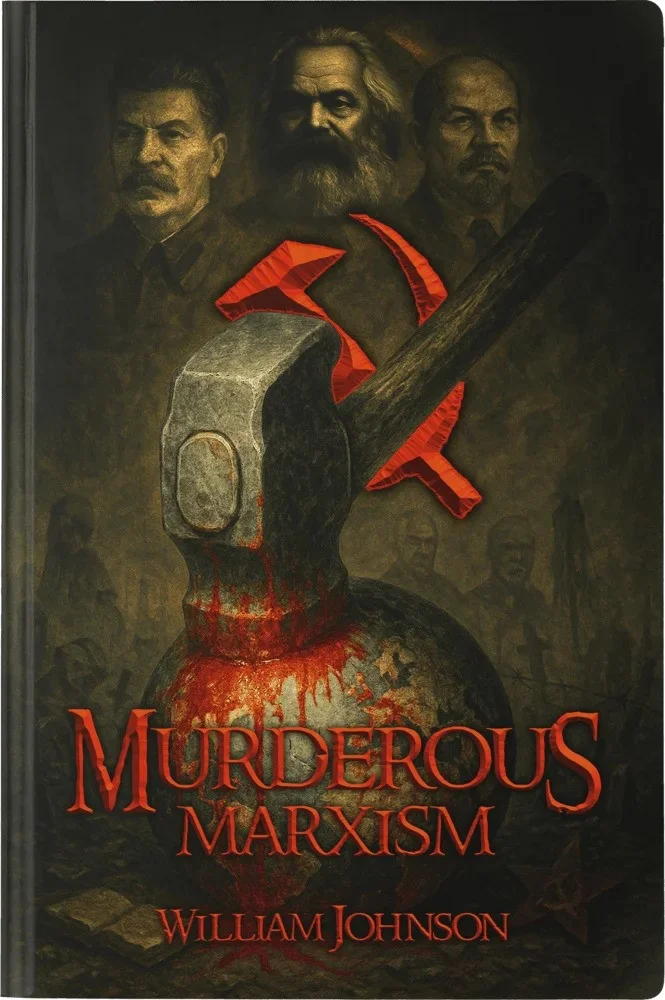
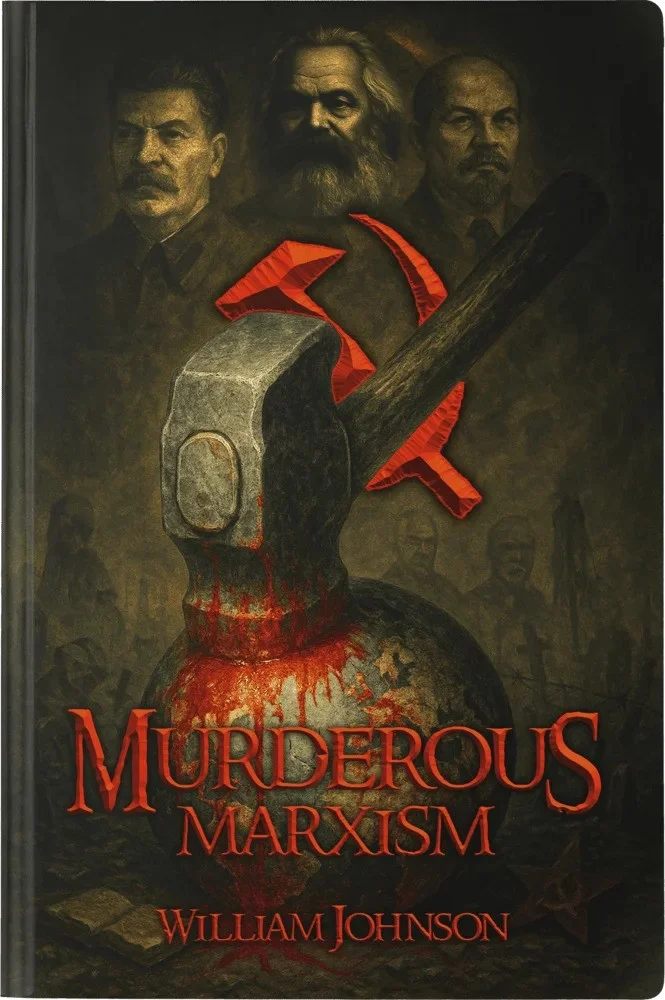
Then we’ll look at why Murderous Marxism by William Johnson has become a standout historical nonfiction book for readers.
Why Historical Nonfiction Still Shapes How We See the Past
A lot of people assume history is settled. However, history is rarely “finished.” It gets rewritten, reframed, and sometimes conveniently shortened.
That’s where Historical Nonfiction becomes powerful. It doesn’t just list dates. Instead, it connects the dots between:
- ideology and institutions
- propaganda and public opinion
- repression and everyday life
- mass violence and “official” narratives
Because many people never study these topics in depth, a well-written historical nonfiction book can feel like turning on a light in a dark room.
What People Mean When They Say Marxist Brutality
The phrase Marxist Brutality is about what happened when revolutionary movements gained power and tried to enforce their worldview.
Across multiple regimes, the pattern repeats. Not always in the same way, but with the same logic. Power must be centralized, enemies must be defined, and dissent must be crushed.
And while some people imagine communism as an “economic experiment,” many regimes used tools that were brutally practical, such as:
- secret police networks
- censorship and controlled media
- forced labor systems
- political prisons
- engineered famines
- show trials and public humiliation
Murderous Marxism by William Johnson stresses that these weren’t random accidents. They were part of how communist states protected themselves once they seized control.
The “Black Hole” Problem: How Atrocities Disappear from Popular Memory
One of the most useful ideas in Murderous Marxism by Author William Johnson is the concept of history falling into a “black hole.” It describes what happens when atrocities exist. Yet public awareness stays strangely shallow.
This doesn’t mean every teacher, journalist, or student is lying. More often, it means the topic gets filtered down into something easier to digest or easier to ignore.
For example, many readers know:
- Auschwitz
- the Holocaust
- Nazi secret police
- Hitler’s dictatorship
But far fewer can clearly explain:
- The early Bolshevik terror campaigns
- The Soviet gulag system’s scale
- Man-made famines under collectivization
- Communist repression across Eastern Europe, Asia, and beyond
Murderous Marxism by William Johnson argues that this imbalance matters because ignorance creates vulnerability. If people don’t know what happened, they’re more likely to romanticize it.
Why the Soviet Union Is the Starting Point for Understanding Communist Violence
Many modern discussions treat the Soviet Union like a “flawed” version of an ideal. Yet historically, it was the template.
In the book, the USSR is presented as the first major communist state to build a full system of modern repression, long before other regimes followed similar paths.
The key point isn’t just that people died. It’s how the machinery worked:
- centralized economic control paired with political terror
- ideological language used to justify punishment
- Fear turned into a daily tool of governance
Once that system existed, it became exportable. And later communist revolutions borrowed heavily from it.
What Makes Murderous Marxism by William Johnson So Readable
Plenty of books cover communist history. The problem is that many are dense, academic, or written as if the reader already knows everything.
The stated goal of Murderous Marxism by William Johnson is different: it aims to be a straightforward, faster read that informs the average person, without burying them in slow, tedious prose.
That matters more than it sounds, because the more readable a book is, the more likely it is to be finished. Moreover, a finished book actually changes what someone knows.