When History Refuses to Stay Buried
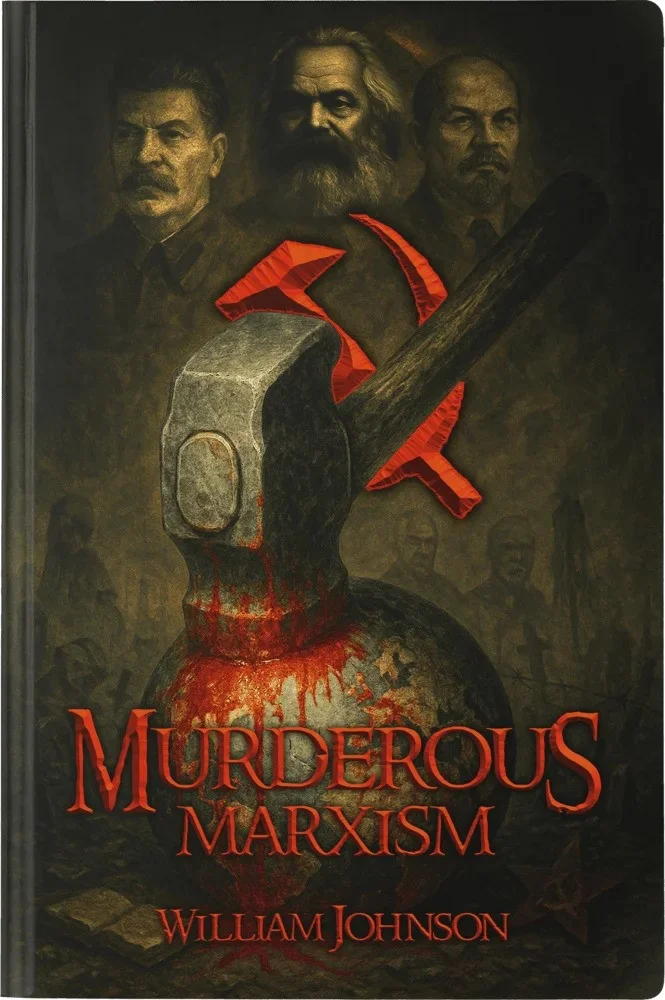
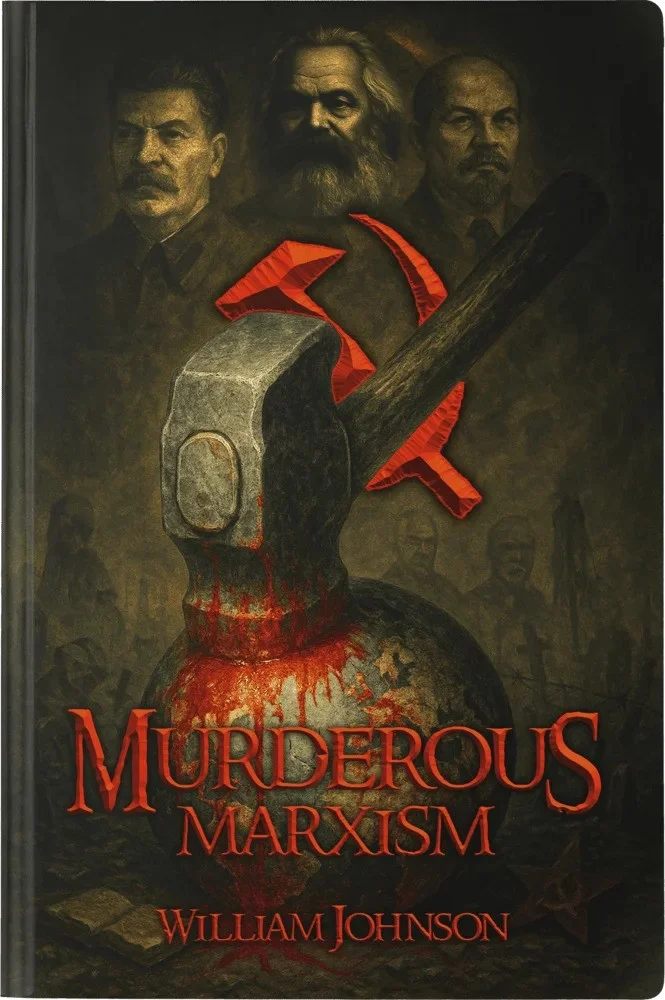
History can feel distant until a book pulls it close enough to breathe. In that sense, Murderous Marxism is one of the best Political History books for readers who want political theory explained through real consequences, not misty classroom language.
The manuscript’s central purpose is clear: it argues that the brutal record of communism has been softened, ignored, or dropped into what the author calls a historical “black hole.”
That phrase gives the book its pulse. It is not merely about Marxism as an idea; it is about what happened when that idea gained police power, armies, prisons, and borders.
The Book’s Battle Against Historical Amnesia
Murderous Marxism by William Johnson was written for the ordinary reader who wants sharp history without wading through academic fog. The book focuses heavily on the Soviet Union, then widens toward Eastern Europe, China, North Korea, Cambodia, Cuba, Afghanistan, Africa, and Latin America.
Its structure helps the reader skim and still understand the journey:
- The rise of Marxism and Bolshevik power
- Communist terror, famine, censorship, and secret police
- Comparisons between regimes and modern ideological echoes
- “Points to Ponder” that turn complex history into memorable reflections
That is why the book sits among Political History Books.
A Dark Ideology Told With Literary Force
The manuscript does not treat Marxism as a museum piece. It presents it as a recurring temptation: the promise of equality wrapped around resentment, class warfare, and state control. As the book states, “Communism is the greatest man-made disaster of the modern world, and Marxism is its North Star.”
That line is severe, but it captures the author’s argument. Author William Johnson wants readers to see the bridge between slogans and suffering. The book moves from theory to famine, from manifestos to mass graves, from revolutionary language to the ordinary people trapped beneath it.
Why This Book Keeps Readers Turning Pages
Some history books drown the reader in dates. This one works differently. Its force comes from moral contrast and vivid patterns. The reader sees how various regimes used different flags yet repeated similar tactics.
- The secret police became the nervous system of power.
- Censorship shaped what citizens could know.
- Famine was often worsened by policy.
- Faith, family, property, and dissent became targets.
This makes the book one of the best books about political history for readers who prefer history with a clear thread.
The Worldwide Shadow Cast by Marxism
The book’s sweep is wide. It does not stop with Russia. It moves through Soviet influence, the postwar domination of Eastern Europe, Asian revolutions, Cuba, Nicaragua, Afghanistan, and African conflicts. In doing so, it shows Marxism not simply as a national experiment but as an international force.
Readers looking for the best books about politics and history should pick Murderous Marxism. The book connects political ideas to consequences across continents. It asks a plain but powerful question: if an ideology repeatedly requires terror, censorship, and escape-proof borders, what does that reveal?
Persuasive Without Preaching: The Book’s Quiet Power
The book persuades me because it feels urgent. It was written to inform readers who may have heard flattering theories but not the cost paid by citizens under Marxist regimes. It also challenges selective memory, especially when modern culture praises radical ideas without studying their older ruins.
William Johnson does not write like a detached tour guide. He writes like someone alarmed by historical amnesia. That is the book’s charm and edge. It wants the reader to find it more difficult to deceive.
Why Its Warning Feels Urgent Today
Murderous Marxism looks backward to explain why the present deserves caution. The manuscript discusses modern cultural disputes, education, censorship, and renewed interest in Marxist language. Even when readers disagree with parts of the interpretation, the book pushes them to examine assumptions.
Its value lies in clarity. It turns political history into a warning about human nature: power often arrives dressed as justice, but its record must be tested by what it does to actual people.
A Necessary Read for Minds That Question History
Murderous Marxism earns attention because it gives readers a map of ideology, violence, and memory. It shows how noble words can become machinery, and how history can be hidden when it embarrasses fashionable beliefs.
Among the best Political History books, it stands out for being direct, readable, and unafraid. It does not ask readers to admire the author. It asks them to remember the victims, question comforting narratives, and treat political promises with a wiser eye.